
English| EUR
Suggested for you
More currencies
Choose a language
Summer transforms the Laguna Esmeralda trek into an accessible, extended-daylight experience with stable trail conditions and minimal snow cover. Understanding the seasonal window, weather patterns, and arrival timing ensures a safe and complete hike to the turquoise lagoon.
Quick answer
Summer hiking at Laguna Esmeralda runs from December through March, with trails fully accessible and up to 17 hours of daylight in peak season. Hikers should begin before 15:00 to complete the 9.6-kilometer round trip before afternoon weather shifts, which bring sudden wind and temperature drops even in summer months. The trailhead in Valle de Tierra Mayor remains open 24 hours, but ranger recommendations prioritize morning starts between 07:00 and 11:00.
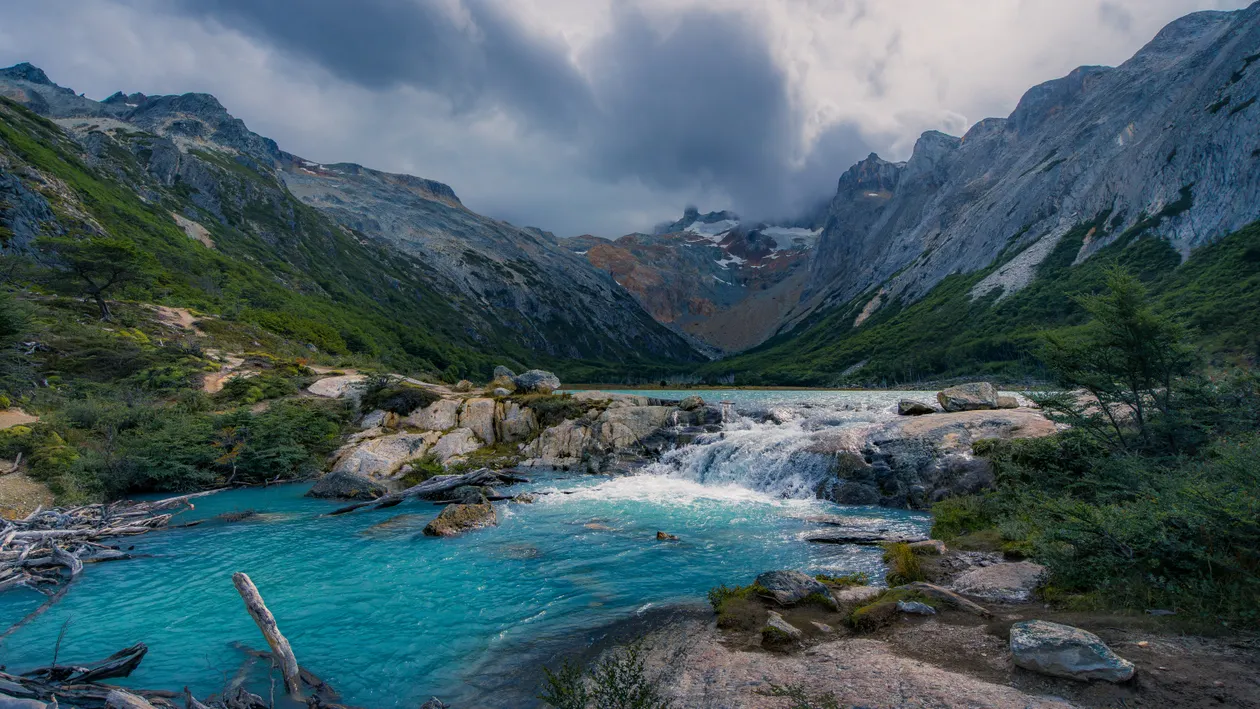
The Patagonian summer sun rises before 05:00 and sets after 22:00 in January, creating a hiking window unmatched anywhere else in Argentina. This extended daylight defines the trekking laguna esmeralda ushuaia verano experience, allowing hikers to complete the moderately challenging trail without the time pressure that governs winter expeditions. The trail through Valle de Tierra Mayor sheds its snow cover by mid-December, revealing compact peat bogs, exposed beaver dam networks, and clearly marked routes across lengas forests. Summer conditions bring both advantages and new considerations. Temperatures range from 5°C to 15°C, warm enough to hike in layered technical clothing without heavy insulation, but afternoon winds from the Beagle Channel can drop perceived temperatures rapidly. The trail surface dries significantly compared to shoulder seasons, reducing mud sections and making stream crossings more predictable. Hikers gain clear views of the Ojo del Albino glacier and the surrounding peaks of the Martial Range, visibility often obscured by winter storms. The seasonal accessibility of trekking laguna esmeralda ushuaia verano does not eliminate weather volatility. Patagonian microclimates shift within hours, and summer storms can deliver rain, hail, or brief snow squalls above 400 meters elevation. Rangers stationed at the Valle de Tierra Mayor entrance monitor conditions daily and advise hikers on current trail status, including beaver dam integrity and water levels in the Rio Esmeralda crossings. The recommendation to avoid starting after 15:00 reflects not daylight limits but the statistical pattern of afternoon weather deterioration. The summer season also concentrates visitor numbers. January and February see peak traffic, with 200 to 300 hikers daily on weekends, compared to fewer than 50 in winter months. Early morning departures between 07:00 and 09:00 avoid crowding at the lagoon viewpoint and provide optimal light angles for photography, as the morning sun illuminates the glacier-fed waters from the east. The turquoise color of Laguna Esmeralda intensifies under direct sunlight, a phenomenon caused by suspended glacial flour particles that scatter blue and green wavelengths. Practical preparation for summer trekking includes sun protection often underestimated at this latitude. The ozone layer thins over southern Patagonia, and UV exposure at 300 meters elevation exceeds that of lower Argentine latitudes. Hikers require high-SPF sunscreen, polarized sunglasses, and wide-brimmed hats even on overcast days. Hydration needs increase with extended daylight activity, and the trail offers no potable water sources beyond the trailhead, requiring at least two liters per person for the five-hour round trip.
“The Patagonian summer sun rises before 05:00 and sets after 22:00 in January, creating a hiking window unmatched anywhere else in Argentina.”
The summer season from December through March offers the most stable conditions for trekking to Laguna Esmeralda. During these months, extended daylight hours maximize trail accessibility and visibility.
10°C to 15°C. Long days with frequent wind.
Peak daylight hours allow for flexible scheduling. Expect variable winds common in Patagonia.
8°C to 13°C. Cooler, shifting weather patterns.
Lower visitor density compared to peak summer. Daylight begins to shorten toward the end of March.
—
Mid-week treks offer quieter trails. Weather remains unpredictable regardless of the day of the week.
Verdict: The best period for trekking is January or February, specifically on weekdays to manage trail occupancy and utilize the longest possible daylight windows.
The trail to Laguna Esmeralda is accessible daily throughout the summer season. Hikers should plan their trek to align with daylight hours and safety recommendations.
The trailhead for Laguna Esmeralda is located in the Valle de Tierra Mayor, accessible from Ushuaia via National Route 3. Visitors typically reach the starting point by private vehicle or local shuttle services departing from the city center.
Ruta Nacional 3 to Valle de Tierra Mayor
Shuttle service from Ushuaia to Tierra Mayor
Direct transfer to the trailhead
To ensure safe hiking conditions during the summer season, plan your arrival at the trailhead between 07:00 and 15:00. Entering after 15:00 is not recommended due to afternoon weather shifts and safety considerations.
Access to the Laguna Esmeralda trail is managed as a public-access natural area. There are no entry charges or ticket requirements for hikers visiting during the summer season.
Verdict: A typical adult pays 0 ARS to access the trail, as there are no fees associated with this hike.
Summer trekking in Valle de Tierra Mayor requires preparation for variable weather and extended daylight conditions.
Everything you need to know about trekking laguna esmeralda ushuaia verano
The trail is accessible for most hikers, including families, though children should have some experience with uneven mountain terrain. Proper preparation for changing weather is essential when planning your trekking laguna esmeralda ushuaia verano trip.
There is no cost to access the trail, as the entrance fee is 0 ARS for all visitors. This makes it an accessible outdoor activity in the Tierra del Fuego region.
The best arrival window is between 07:00 and 15:00 to ensure you have enough daylight and to avoid afternoon weather shifts. This timing helps maintain safety and provides the best conditions for the excursion.
It is strongly recommended not to enter the trail after 15:00 for safety reasons. Sticking to the suggested arrival window ensures you avoid navigating the path in fading light.
Bring sturdy waterproof hiking boots, layered clothing to handle wind or rain, and sufficient water and snacks. The landscape features peat bogs, glacial valleys, and dense forests that require proper gear.
During the summer season, the path is well-marked and generally accessible despite muddy sections near the peat bogs. Following the established trail ensures you protect the delicate ecosystem of the valley.